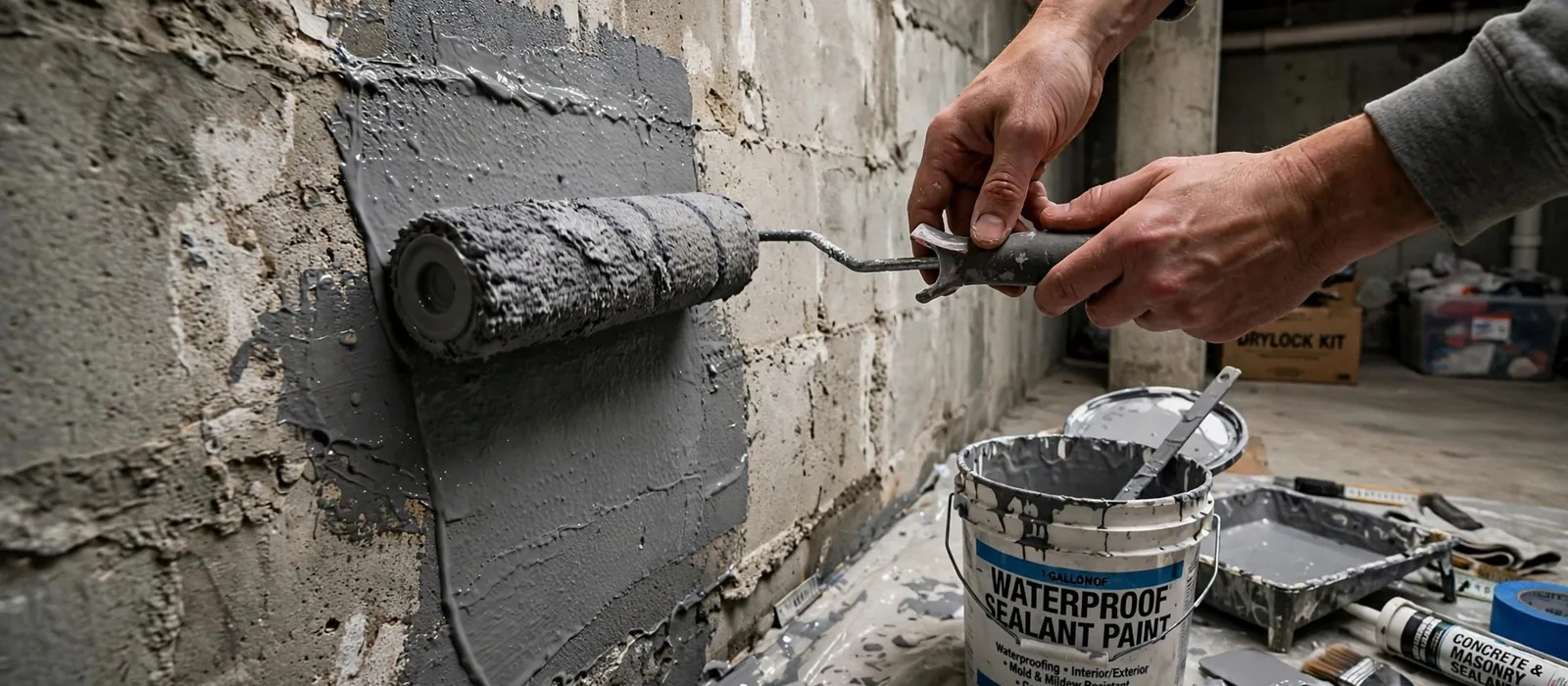
DIY basement waterproofing in Independence, KY works best when the water is coming from the surface. Clogged gutters, short downspouts, and soil that slopes toward the house cause a large share of damp basements, and you can fix all three yourself. Paint-on sealers and a rented drain tile system are a different story, because they only help in narrow cases.
This guide walks through each do-it-yourself option in the order a professional would try them. It covers what each one fixes, what it cannot touch, and the signs that a job has outgrown a homeowner. A Kenton County basement may be wet for several different reasons, so the first job is figuring out which one you have.
Start outside, where the water begins
Most basement water starts as rain that lands on the roof or yard and then sinks beside the foundation. Stop that water before it reaches the wall and the wall has less to resist. This is why every sensible waterproofing plan begins with gutters, downspouts, and the slope of the ground, long before anyone talks about drain tile.
Clean the gutters first. A gutter packed with leaves spills over the edge and dumps a sheet of water right at the footing. Run a hose into each downspout and watch the outlet. If the flow is weak, the downspout is clogged, and you can often clear it with a plumber's snake or a pressure rinse from the bottom.
Next, check where each downspout ends. A downspout that empties at the foundation is a leak waiting to happen. Add an extension that carries the water 4 to 6 feet away from the wall, or connect it to a buried solid pipe that runs downhill to a safe spot in the yard.
A sensible order for a weekend of work
Find the wet spot
Walk the basement during or right after a hard rain with a flashlight. Note whether water shows at a wall crack, where the wall meets the floor, or in a single corner.
Fix the gutters and downspouts
Clear debris, reseal leaking seams, tighten brackets that let the trough sag, and extend every downspout. This costs little and solves more wet basements than any other step.
Rebuild the grade
Pack clay-heavy fill against the foundation so the ground drops about 6 inches over the first 10 feet. Keep soil at least a few inches below the siding or sill plate so you do not invite termites or rot.
Seal the visible cracks
Chip out loose material, brush the crack clean, and fill it with hydraulic cement or an injection kit made for the crack type. Let it cure fully before the next rain.
Wait and watch
Give the changes two or three good rains before spending more. If the wall stays dry, you are done. If water still shows up, the problem sits deeper.
Which fix matches which symptom
Match what you see to the likely cause. This table keeps you from buying a product that cannot work on your problem.
| What you see | Likely cause | DIY fix, or call a plumber |
|---|---|---|
| Water at one spot after rain, near a downspout | Roof water dumped at the wall | DIY: extensions, gutter cleaning, regrade |
| Damp wall with white powder on the surface | Moisture passing through block or concrete | DIY: better drainage outside, then masonry sealer |
| Single thin crack that weeps in a storm | Shrinkage or settling crack | DIY: hydraulic cement or injection kit |
| Water along the floor edge in many places | Pressure from groundwater under the slab | Call: interior drain and sump needed |
| Horizontal crack with the wall bowing inward | Soil pressure on the wall | Call: this is structural, not a plumbing fix alone |
| Floor wet in every storm, pit full of water | Water table pushing up | Call: sump pump and drain system |
If your symptoms land in the bottom three rows, the table is saying the same thing a drain tile specialist would: the water pressure is too high for a surface patch to hold.
Water keeps coming back?
Call our 24/7 line and a licensed plumber will talk through your options.
Interior systems homeowners can and cannot build
Interior waterproofing means catching water after it gets in and sending it out. Here is how each piece behaves in practice.
Paint-on sealers
Silicate and masonry paints can slow dampness through a dry wall. They cannot hold back water that pushes from behind and will blister and peel.
Hydraulic cement
This quick-setting mix plugs small active leaks. It works on cracks and holes, not on a wall that seeps everywhere.
Crack injection kits
Epoxy or polyurethane goes into a single crack with a low-pressure applicator. It suits narrow, stable cracks that do not keep moving.
Dimple board and wall membranes
Plastic sheeting directs seepage down to the floor edge. It manages moisture but still needs a drain at the bottom to carry water away.
Interior drain tile
A perforated 4-inch pipe in a gravel bed along the footing collects water and moves it to a sump. This means cutting the slab, digging, and repairing concrete, which is heavy work.
Sump pit and pump
A pit 18 to 24 inches deep collects the water and a pump sends it out through a discharge pipe. The pump, check valve, and outlet all need to be sized and placed correctly.
Why sealers fail against real water pressure
Concrete block is full of tiny voids, and soil water behind it carries pressure that grows with every foot of wet soil. A sealer coats the room side of the wall, so the water pushes the coating off from behind. People call that failure a bad product, but the real cause is pressure from the wrong side.
There is a quick test before you buy anything. Tape a 2-foot square of plastic sheet to the wall with all four edges sealed, and leave it for a day or two. Moisture under the plastic means water is coming through the wall. Moisture on top of the plastic means humid air is condensing, and a dehumidifier may be the right fix.
What Independence homeowners should know about runoff
Stormwater in Independence falls under Sanitation District No. 1 (SD1), the same agency that handles sewers, and Banklick Creek is a Kenton County creek that feeds the Licking River. We cannot speak to flooding history or soil conditions, so your own basement is the best evidence you have.
The practical point is where your water goes once it leaves your property. A sump discharge or downspout line should drain out into the yard and away from the house, and the rules on where stormwater may go are SD1's to explain. Call SD1 before you tie any pipe into a storm inlet or ditch.
Source: City of Independence phone list (utility contacts)
What to inspect before you spend money
Work through this list on a dry day and again in the rain.
- Look for gutters that overflow, sag, or leak at the corners.
- Confirm every downspout ends at least 4 feet from the foundation.
- Check that the soil slopes away from the house on all four sides.
- Look at window wells for debris, standing water, and drain holes that are blocked.
- Press a flashlight along the wall base and floor joint for dampness or white mineral crust.
- Note any sump pit and test it by pouring in a bucket of water to see if the float rises and the pump runs.
- Check for a floor drain, and confirm it is not backing up from the sewer.
When to call a plumber instead
Call a plumber when water enters in several places, when the pit fills in every storm, or when a wall bows or cracks horizontally. Those signs point to pressure or structure, and a patch will not change either one. A wall that is moving may also need a structural engineer before any waterproofing begins.
Our licensed plumbers install sump systems and can talk through basement waterproofing options when water has beaten the outside fixes. If your pump is old, noisy, or runs constantly, see our page on sump pump installation and repair before the next heavy rain. For after-hours flooding, our 24/7 emergency line is open.
We also work in nearby towns such as Elsmere and Taylor Mill, so a neighbor's wet basement is not far from our trucks. The price depends on pit depth, how much slab must be cut, discharge routing, and pump size, and we give a clear price before work starts.
Frequently asked questions
Yes, for surface water problems. Gutters, downspout extensions, regrading, and small crack repairs are all reasonable weekend jobs. Interior drain tile and sump pits are harder, and wall movement or water from the floor edge is a sign to call a professional.
They work on a wall that is only damp and has good drainage outside. They fail when water pushes through from behind, because the coating peels away. Test with a taped plastic square before you paint.
Aim for 4 to 6 feet at minimum, sloping away from the wall. A buried solid pipe that exits farther out in the yard works even better, as long as it is pitched downhill and has a clear outlet.
It helps if the dampness comes from humid air condensing on cool walls. It will not stop real seepage. If the plastic sheet test shows moisture under the plastic, you need drainage fixes first.
Sanitation District No. 1 handles stormwater management, along with sewers, and Banklick Creek is a Kenton County creek that flows toward the Licking River. Call SD1 if you are unsure where a downspout or sump discharge may drain, and do not connect a sump line to the sanitary sewer.
When water collects on the floor in every heavy rain or the water table pushes up through the slab. A pit and pump lower the water level and send it outside. The check valve and discharge line matter as much as the pump itself.
Sources and official contacts
Local details in this guide come from the sources below. They are the right offices for questions about the water and sewer systems or plumbing rules.
- Sanitation District No. 1
Handles sewer and stormwater, and takes sewer emergency reports.(859) 578-7450 - Kentucky Division of Plumbing
Oversees plumbing in the state, including the State Plumbing Code that sets the standards for our work. Verify a plumber's license or ask about permits here.(502) 573-0397