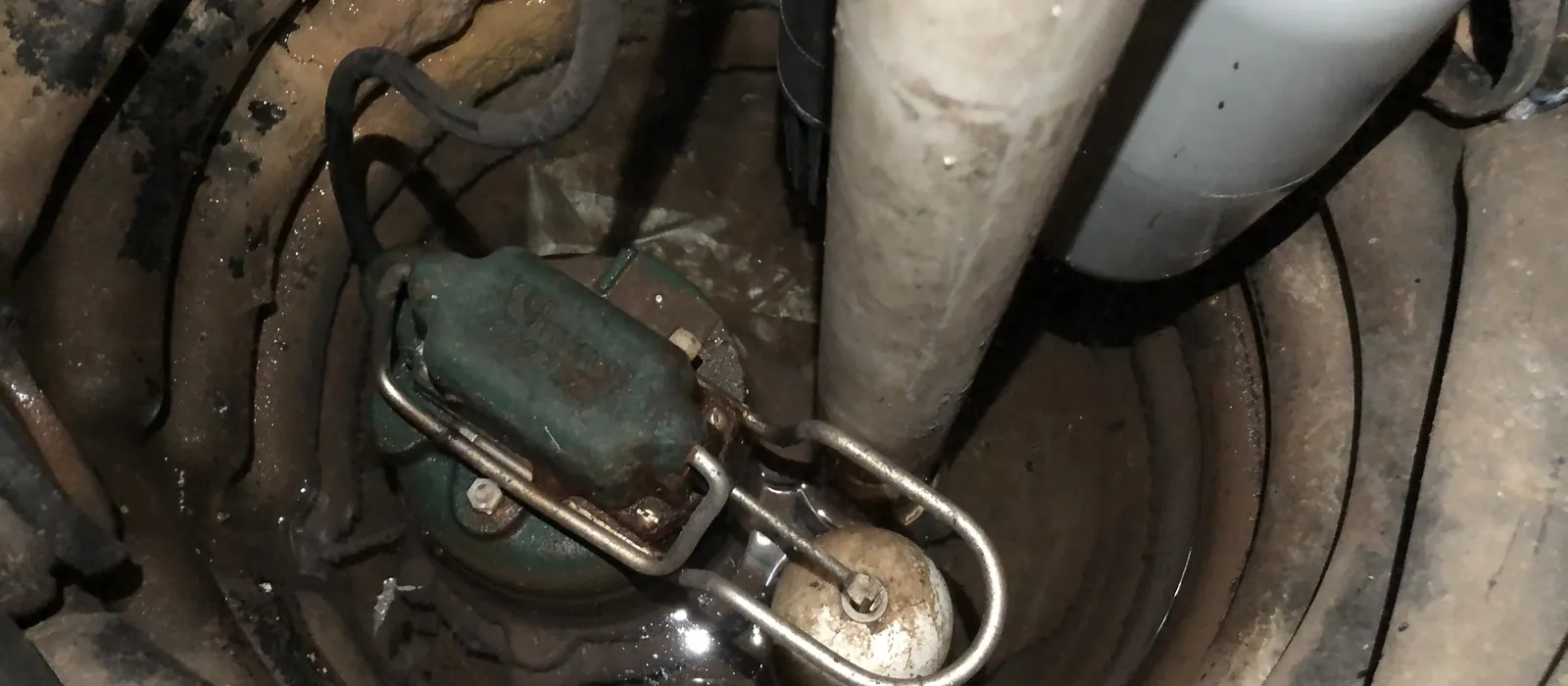
When a sump pump stops, the pit fills and the water has nowhere to go but your floor. We provide emergency sump pump repair in Independence, KY, including replacement of failed pumps, new installs and fixes to the float, check valve and discharge line.
Call our 24/7 line the moment you see a full pit or hear nothing during a storm. Same-day appointments are available when the schedule allows. Our licensed plumbers give you a clear price before work starts.
The pit is filling and the pump is not running
A sump pit that fills faster than it empties gives you minutes to hours before water reaches finished floors. Call us first, then act on the list below. If the pump is plugged in but silent, the cause is often a stuck float, a tripped breaker or a burned-out motor.
Do not wade into water if the pump, outlet or nearby appliances are powered. Standing water and electricity can be deadly, so stay out and call a licensed electrician or us if you cannot cut power safely.
- Check that the pump is plugged in and that the outlet's reset button has not tripped.
- Lift the float by hand (only if no water covers any live cord). If the pump starts, the float is the problem.
- Use a bucket or wet vacuum to lower the pit level and buy time.
- Move boxes, rugs and stored items off the floor.
- Keep downspouts pointed away from the house while you wait.
Signs a sump pump is on its way out
Pumps rarely fail without hints. Catching the early signs lets you replace one on a dry day instead of during a storm.
Loud grinding or rattling
Worn bearings or a damaged impeller make the pump louder than it used to be.
Cycles on and off rapidly
A stuck float or a failed check valve lets water fall back into the pit, so the pump restarts again and again.
Runs without moving water
An airlocked or burned-out pump hums but the water level does not drop.
Rust or sludge in the pit
Silt and debris foul the float and clog the intake screen.
Pump is more than ten years old
A typical pump lasts roughly seven to ten years, depending on how often it runs.
Damp smell in the basement
Persistent moisture can mean the pit is not keeping up.
Repair, replace or add a backup
A float switch or check valve is cheap to replace and often restores a pump that is otherwise sound. A motor that has burned out or a housing that has rusted through is better replaced. We give you both options with a price for each so you can decide.
A second pump, or a battery backup, covers the case where power fails during the same storm that fills the pit. Backup systems run off a deep-cycle battery and a separate switch. They take a few hours of runtime, which helps in short outages but not long ones.
Pit filling with water?
Call our 24/7 line and tell us what the pump is doing.
Pump types and where each fits
Not every pump in a basement is a sump pump. Matching the type to the job avoids a repeat failure.
| Type | Typical use | Notes |
|---|---|---|
| Submersible sump pump | Clear groundwater in a pit | Sits in the water and runs quietly, most common in homes |
| Pedestal sump pump | Shallow or narrow pits | Motor sits above the pit, easier to reach but louder |
| Battery backup pump | Power outages | Mounts beside the main pump and runs on a battery |
| Sewage ejector pump | Basement bathroom or laundry | Handles solids and sends waste up to the sewer line |
| Effluent pump | Septic systems with a separate tank | Moves filtered wastewater, not raw solids |
Many people say sump pump when they mean a sewage ejector. The two look alike but are not interchangeable, so tell us what is in the basement floor and where it drains.
How we replace or install a pump
Cut power and clear the pit
We unplug the pump and pump or bail the pit down so we can see the bottom.
Disconnect the discharge
The union and check valve come off, and we inspect the discharge pipe for cracks or clogs.
Set the new pump
The pit is cleaned of silt, and the pump sits on a firm base so the float swings freely.
Reconnect and add a check valve
A new check valve keeps water from draining back into the pit after each cycle.
Pour-test the system
We run water into the pit until the float lifts, then confirm the pump starts and the discharge runs outside.
What the technician checks on a sump system
A pump is only one part of the system. We check each piece in the path.
- Pit size and depth, since a small pit makes the pump cycle too often.
- Float position and travel, to be sure it is not catching on the wall or cord.
- Check valve direction and condition.
- The discharge pipe for kinks, ice dams and a clear outlet away from the house.
- The electrical outlet, ideally a GFCI on its own circuit.
- Weep holes or a vent hole in the discharge pipe that can cause spray.
What drives the cost of sump pump work
A float swap and a full pit rebuild are very different jobs. We confirm which one you have before quoting.
Pump size and horsepower
A one-third horsepower pump suits many homes. A busy pit or a long vertical lift can call for more.
Pit condition
A cracked liner, silt or a missing pit lid adds work.
Discharge line
Frozen, clogged or crushed pipe has to be cleared or replaced for the pump to work.
Backup system
Adding a battery backup or a second pump is a separate equipment and labor cost.
Storm timing
After-hours calls during heavy rain are priced for the visit, and we say so first.
Water that comes up through the floor from a failed pump is often excluded unless you carry a specific water backup add-on. Check your own policy before a storm, not after.
Plumbing fixes the pump, not the whole basement
A sump pump moves water that is already in the ground around your foundation. It does not stop the water from collecting there. We handle the pump, pit and discharge, and our page on basement waterproofing explains the grading and gutter work that cuts down how often the pump has to run.
Frequently asked questions
The impeller may be clogged, the pump may be airlocked, or the check valve may be stuck shut. A technician can usually find the cause in one visit. Bail the pit by hand while you wait.
Yes. Our 24/7 line handles sump pump failures at night and on weekends, including storm calls. First check the plug and breaker, bail the pit if you can do so safely, and keep out of any water touching powered equipment.
Most last roughly seven to ten years, but a pump that runs all spring wears faster. If yours is near that age and makes new noises, replacing it before the next storm is safer than waiting.
We install pits, pumps and discharge lines for the plumbing side of the job. If the basement needs exterior grading or gutter work as well, a grading or drainage contractor handles that part.
No. A sump pump moves groundwater from a pit. An ejector pump lifts sewage from a basement bathroom or laundry to the main sewer line. Tell us which one you have and we will bring the right parts.
If your pump runs in storms and the power drops, a backup is worth considering. It keeps one pump running for a few hours. A long outage can still drain the battery, so keep valuables off the floor.
The discharge pipe should carry it outside and well away from the foundation, or water just cycles back to the pit. SD1 handles sewer and stormwater management, so ask them or the city if you are unsure where your discharge may go.
A pump that runs cannot help if the pit is too small, the discharge is blocked or water is entering from a cracked pipe. A leak detection visit can rule out a supply or drain line. For neighbors in Elsmere, see our Elsmere plumber page.
Sources and official contacts
Utility and licensing facts on this page come from the offices below. Contact them directly for anything on their side of the line.
- Sanitation District No. 1
Handles sewer and stormwater, and takes sewer emergency reports.(859) 578-7450 - Kentucky Division of Plumbing
Oversees plumbing in the state, including the State Plumbing Code that sets the standards for our work. Verify a plumber's license or ask about permits here.(502) 573-0397