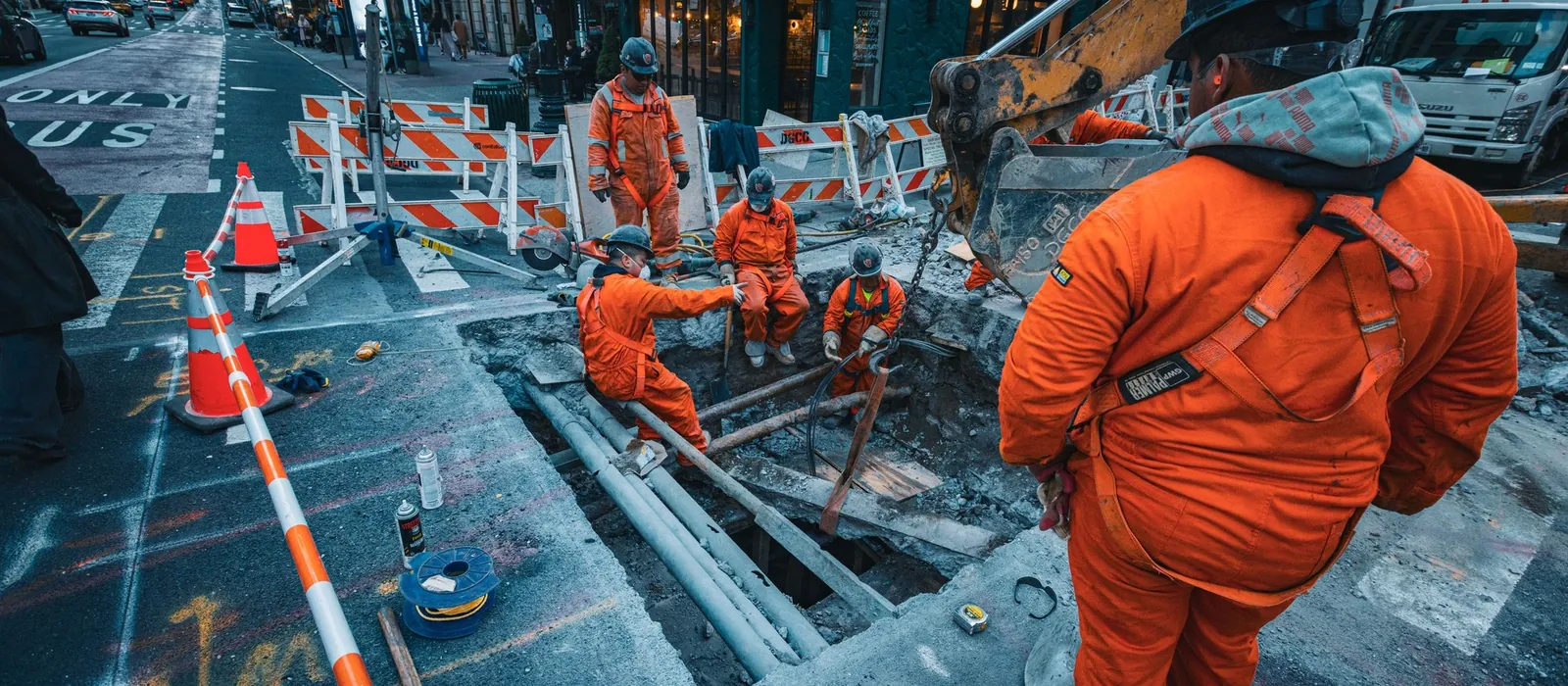
A sewer pipe that is broken, sagging, or full of roots cannot be fixed by clearing it again. If sewage is backing up now, stop using water, keep people away from the wet area, and call our 24/7 line. We handle emergency sewer line repair in Independence, KY with licensed and insured plumbers who find the failure on camera and give a clear price before work starts.
Repair starts with the cause, because the cause picks the fix. A root-split joint, a crushed section, and a pipe that has sunk into soft ground each call for a different repair. Same-day appointments are available when the schedule allows, so a camera look can happen quickly. Homes across Kenton County see the same failures.
Why sewer pipes fail in the first place
Most failures come from a short list of causes. Knowing which one applies decides whether a small spot repair is enough.
Root intrusion
Roots enter at joints and cracks, then swell until the seal gives way. A split pipe often shows a root mass at its center.
Offset or separated joints
Soil shifts and two pipe sections slide apart. A lip forms that catches paper and grease, and soil can wash in.
Bellied pipe
A section sinks into soft ground and creates a low spot. Waste pools there and leaves a standing blockage.
Corroded cast iron
Older cast iron rusts from the inside, thins, and flakes. Large scale pieces break loose and jam.
Crushed or collapsed section
Heavy loads, tree movement, or construction can crush the pipe. Flow stops or runs through a gap.
Failed clay tile
Short clay sections have many joints. Every joint is a place for roots, gaps, or settling.
Backups that keep returning after cleaning
A line that opens with a cable and clogs again within weeks is not just dirty. Something is catching waste, and that something is usually damage. Our sewer line cleaning service restores flow, but cleaning cannot close a crack or flatten a sag.
Other hints include a sewer smell in the yard, a sunken stripe of lawn along the line, or a slow drain that clears only briefly. Gurgling toilets after rain can mean soil water is entering a break. Any of these justifies a camera look before spending more on cleaning. A soggy yard with no sewer smell may instead be the water supply, which our water line repair page covers.
What a technician finds with the camera
A sewer camera is a waterproof lens on a flexible rod, pushed down the line while a screen shows the inside of the pipe.
- Pipe material, such as PVC, cast iron, clay, or Orangeburg fiber pipe.
- Cracks, holes, and the type of break, whether lengthwise, circular, or shattered.
- Roots, how far they extend, and whether they enter at a joint.
- Offsets between pipe sections, measured against pipe width.
- Low spots where water stands instead of flowing.
- The depth and distance of each problem from the cleanout, in feet.
- A locator signal at the surface to mark the exact spot above ground.
Need a camera look at your sewer line?
Call our 24/7 line and a licensed plumber will set up the inspection.
Repair choices compared
The right repair depends on the damage, the pipe, and what sits above it. This table shows the common options.
| Option | Best when | Trade-off |
|---|---|---|
| Spot repair (dig and replace a section) | One short failed section, reachable by digging | Surface is torn up at one location |
| Cured-in-place lining | Cracks or small gaps along a pipe that still holds its shape | Cannot fix a collapsed or heavily offset pipe |
| Pipe bursting | A long run of failed pipe with a clear path | Needs entry and exit pits |
| Full open-trench replacement | Severe sag, collapse, or mixed failures | Most disruption to yard, driveway, or landscaping |
| Cleaning plus monitoring | Light root growth with sound pipe | Only a delay if damage is present |
Trenchless methods avoid a long trench, but they are not right for every pipe. The camera footage tells us which options are open to you.
Sewage backing up from a failed line
A broken sewer line can spill waste into the house or under the yard. Our 24/7 line takes calls at night and on weekends, and same-day appointments are offered when the schedule allows. The safest first steps are about limiting water and contact.
- Stop all water use, including laundry and dishwashers.
- Keep children, pets, and anyone ill away from wet areas.
- Do not use a wet vacuum on sewage or touch switches near water.
- Mark any wet spots in the yard, and take photos for insurance.
- Do not pour chemicals into the drains, as they can harm the pipe and the crew.
- Leave the cleanout capped unless the plumber tells you otherwise.
How a sewer repair job moves from camera to finished pipe
Clear and camera
We open the line enough to pass the camera, then record the whole run from the house to the street connection.
Locate and mark
A locator on the surface marks the damage spot. This keeps digging small and avoids guesswork.
Review the options with you
We show the footage, explain which repair fits, and give a clear price before work starts.
Repair the pipe
The chosen method is carried out, whether a short dig, a liner, or a replacement section, with new pipe sloped correctly.
Test and restore
We run water and a second camera pass to confirm flow. Any dug area is backfilled and tidied.
Public main or your own line? Ask first
Sanitation District No. 1 runs sewer and stormwater for Independence. If a camera shows the failure sits at or past the street connection, ask the district whether that portion is its responsibility before paying for repair there. Neighbors reporting backups on the same street is another sign the problem may be public.
Older neighboring areas deserve a mention too. Elsmere was settled in the 1880s and incorporated in 1896, so some of its homes may still have clay or cast iron sewer pipes. Our plumber in Elsmere, KY page explains our service there, and camera checks come first on older lines.
What decides the cost of a sewer repair
Sewer repair ranges from a short spot fix to a full replacement, and only the camera footage tells which one you face. These items drive the bill.
Depth of the pipe
A pipe 3 feet down is a simple dig. One 8 feet down needs shoring, more soil removal, and more time.
Length of damaged pipe
A 4-foot failed section is a different job from 40 feet of bad pipe.
What lies above
Concrete, a driveway, trees, or utility lines change digging time and restoration work.
Repair method
Spot repair, lining, bursting, and open trench each have different labor, material, and equipment needs.
Restoration scope
Backfill and surface repair depend on how much ground was opened.
Insurance often covers sudden damage such as a burst pipe or a resulting backup, but rarely covers repair of wear, age, or root damage. Read your own policy, and ask about sewer line or water backup endorsements.
Why checking a license matters before any dig
Sewer repair means opening ground and connecting to waste lines, so the work should follow state plumbing rules. Kentucky oversees plumbing through the Division of Plumbing inside the Department of Housing, Buildings and Construction. Verify any plumber's license with that office, and ask the city or the Division about permit rules for your job.
Frequently asked questions
Often yes. If the pipe still holds its shape, a liner can seal cracks and small gaps from inside. A short failed section can be reached by digging one small pit. A collapsed or heavily sagging pipe usually needs an open dig. The camera footage decides.
Yes. Our 24/7 line is staffed nights and weekends, and same-day appointments are offered when the schedule allows. First, stop using water and keep everyone away from wet areas. Take photos of any damage so you have them for your insurance company.
Repeat clogs after cable cleaning, slow drains across the house, and gurgling toilets are strong clues. A camera confirms it by showing root hair or a mass at a joint. Cutting roots clears the flow but the joint still needs repair.
Orangeburg is a tar-paper and fiber pipe used in the mid-20th century. It softens, ovals, and collapses with age. If a camera shows it, replacement or lining is usually the answer. We note the pipe material on every camera visit.
Public sewer mains are handled by Sanitation District No. 1, not by homeowners. Our camera footage can show where the damage sits, and you can take it to the district when the failure is past your property line.
Usually yes, but water use may be limited for part of the day. Spot repairs often finish quickly, while a full replacement can take longer. We explain the timeline and what to avoid before we start.
Cleaning fits a blocked but sound pipe. Repair fits a broken one. If cleaning has to be repeated every few weeks, or the camera shows cracks, offsets, or a sag, repair is the better path. Our sewer inspection service answers that with footage.
Sources and official contacts
Utility and licensing facts on this page come from the offices below. Contact them directly for anything on their side of the line.
- Sanitation District No. 1
Handles sewer and stormwater, and takes sewer emergency reports.(859) 578-7450 - Kentucky Division of Plumbing
Oversees plumbing in the state, including the State Plumbing Code that sets the standards for our work. Verify a plumber's license or ask about permits here.(502) 573-0397