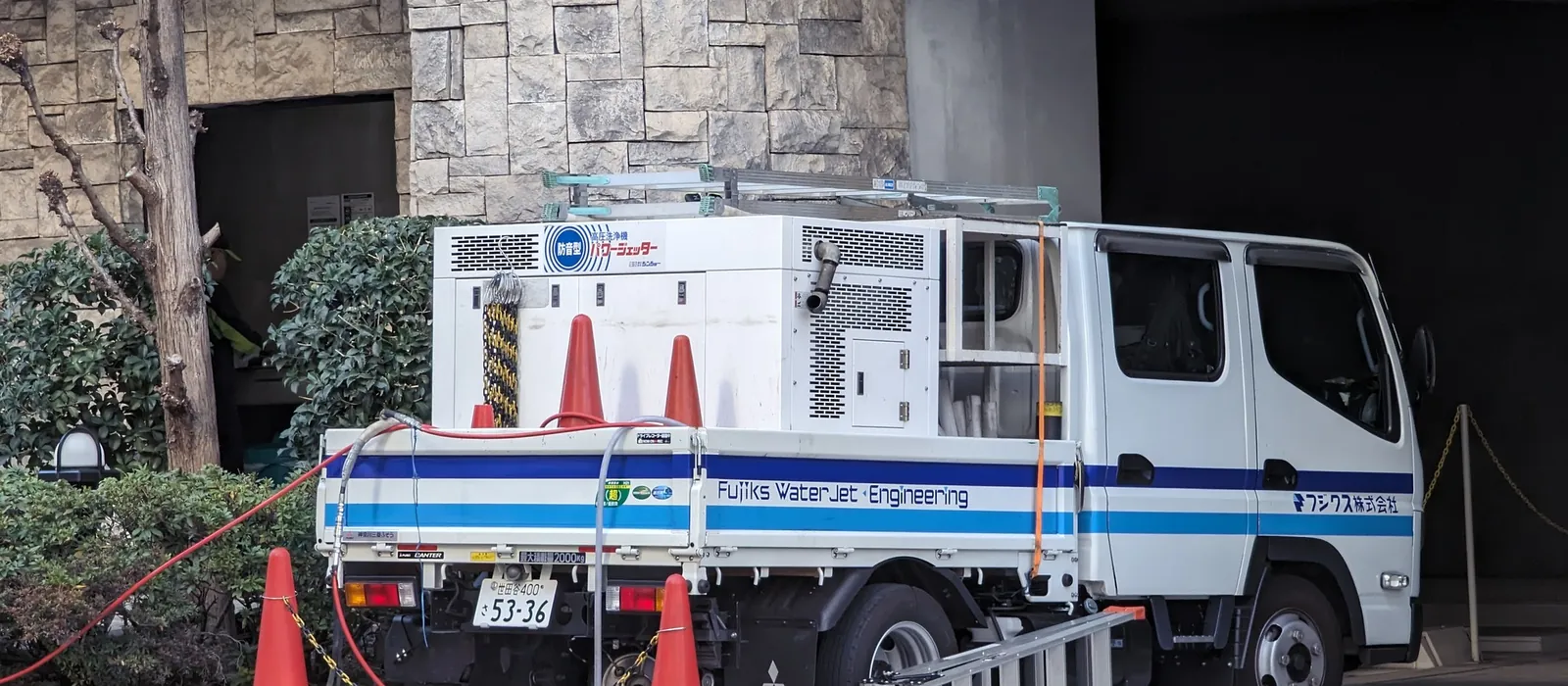
Sewage backing up into a tub or floor drain, after a cable already failed, calls for a stronger tool. Stop using water in the house, keep people away from wet outlets, and call our 24/7 line. We provide emergency hydro jetting in Independence, KY, with licensed plumbers who camera the line, explain the plan, and give a clear price before work starts. Same-day appointments are available when the schedule allows.
Hydro jetting sends water through a hose at several thousand pounds per square inch, with nozzle jets that cut forward and scrub backward. It clears what a cable only punches through. Below, we explain when jetting makes sense, when it does not, and how the job runs inside a Kenton County home.
Drains that clog again every few months
A line that opens with a cable, then slows again in weeks, is telling you something. The cable cut a hole through the middle of the blockage and left the walls coated. Grease, soap scale, and fine roots stay attached to the pipe, and new debris catches on them.
That pattern is what hydro jetting is built for. Water pressure scours the full circle of the pipe, not just the center. If your sink, tub, or main line keeps returning to the same slow state, ask for jetting after a camera look. For one-off clogs, our drain cleaning service is usually the quicker, simpler choice.
If you are not sure which situation you have, a short camera visit through our sewer inspection service can settle it. The footage shows whether the walls are coated, rooted, or broken, so you pay for the right fix the first time. Landlords with several units on one stack often choose jetting for this reason.
How a jetting rig does the work
Camera first
A small camera goes down the line to show the pipe material, the clog, and any cracks. Jetting a broken pipe can make things worse, so this look comes before any pressure.
Hose and nozzle feed in
The hose enters through a cleanout. A nozzle with rear-facing jets pulls the hose forward as it works, while a forward jet breaks the blockage apart.
Pressure is set to the pipe
Cast iron, PVC, and clay each tolerate different pressure. The technician starts lower and increases only as the pipe and the clog allow.
Slow pull back
Jets scrub the wall on the way out, flushing debris toward the main. Several passes over the worst stretch are normal.
Second camera pass
A follow-up view confirms the walls are clean and shows anything the jetting exposed, such as a cracked joint or a root entry point.
Jetting, cabling, and chemicals compared
Each method has a place. This table shows where jetting wins and where it is more than the job needs.
| Method | Best for | Limit |
|---|---|---|
| Cable (auger) | A single soft clog in a short branch | Leaves a coating on the pipe wall |
| Hydro jetting | Grease, scale, sludge, and fine roots in lines of 3 to 6 inches | Not for broken or collapsed pipe |
| Camera inspection | Finding out why a clog keeps returning | Shows the problem but does not clear it |
| Chemical opener | Rarely a good option in a household line | Can damage pipe and sits above hard clogs |
| Root cutting head on a cable | Thick root masses at a joint | Roots grow back unless the joint is repaired |
If roots keep returning at the same joint, that joint is the real problem. Our sewer line cleaning page covers how we handle root-clogged mains.
Cable failed or line keeps clogging?
Call our 24/7 line to book a camera look and a jetting plan.
Sewage is rising and the cable would not get through
This is the point where many homeowners call after hours. Our 24/7 line handles night and weekend calls, and same-day appointments are available when we have room in the schedule. A jetting rig needs a clean cleanout, so tell us where yours is.
Until the plumber arrives, the main goal is to stop adding water. A toilet flush sends 1.6 gallons or more down the same stuck line.
- Stop all water use, including the washing machine and dishwasher.
- Find your cleanout, usually a capped pipe near the foundation, and leave the cap on.
- Keep people and pets out of any wet basement area.
- Turn off power to the area if water is near outlets or an electric panel.
- Photograph the backup for your records and for any insurance claim.
- Tell the dispatcher what the earlier plumber tried and how far the cable went.
What the technician checks before turning on the pressure
The jetting itself takes less time than the checks around it. These are the points that decide whether it is safe.
- Pipe material at the cleanout: cast iron, PVC, clay, or galvanized steel.
- Camera footage showing cracks, offset joints, or a sagging section.
- The distance from the cleanout to the clog, measured in feet.
- Whether a cable already got stuck, and where it stopped.
- Whether the line also serves a basement bath or floor drain below street level.
- Where the water and debris will exit, so the downstream line is clear.
- Whether the pipe is 2, 3, 4, or 6 inches, which sets the nozzle size.
When jetting is the wrong call
A good plumber says no to jetting when it would cause harm. These are the situations where we choose a different path.
Collapsed or crushed pipe
Pressure has nowhere to go and can push debris into the break. A repair comes first.
Badly corroded cast iron
Thin, flaking walls can give way under high pressure. We use gentler tools and a camera.
Offset joints
A lip where two pipes meet catches debris again after jetting. The joint needs repair.
A single soft clog
A cable does the job faster and costs less. Jetting would be more than the problem needs.
Bellied pipe holding water
A low spot refills with waste after any cleaning. Jetting only buys time until the sag is fixed.
Older lines in a city built by annexation
Independence grew by annexation in the 1960s, 1970s, and 1981, so homes in different parts of the city come from different building eras. Houses from those decades may still have cast iron or clay drain pipe. That is why we check the pipe material with a camera before choosing a pressure setting.
If your home is closer to Erlanger, which saw heavy growth after Interstate 75 opened in the early 1960s, the same approach holds. Our plumber in Erlanger, KY page lists what we handle there, and the camera-first rule applies on every job.
What drives the cost of a jetting job
Jetting costs more than a basic cable pass because the rig, the water supply, and the time are larger. The final number depends on what we find in the pipe.
Length of line to clean
Jetting 30 feet of branch is quick. A full run to the street takes longer and uses more water.
Pipe size and condition
Larger pipe needs bigger nozzles. Fragile pipe needs slower, careful passes.
Camera passes
Cameras before and after add time but show you what was removed and what remains.
Whole-house or main only
Cleaning only the main is quicker than also jetting kitchen, bath, and laundry branches.
Access and scheduling
A missing cleanout adds labor, and after-hours calls follow different scheduling than weekday visits.
Insurance often covers sudden damage from a sewage backup, but rarely covers preventive jetting or slow buildup. Read your own policy and ask about water backup coverage before you need it.
Frequently asked questions
Grease, soap scale, or roots are probably clinging to the pipe wall. A cable opens the center, but the coating stays and rebuilds. Jetting scrubs the full wall, which often stretches the time between clogs. We camera first to check that the pipe can handle it.
Yes. Our 24/7 line is staffed nights and weekends, and we offer same-day appointments when the schedule allows. Stop all water use first, since every flush adds to a line that is already stuck, and tell the dispatcher where your cleanout is.
Sometimes. A cable can jam at a joint, a root mass, or a bend, while a jetting nozzle moves differently and breaks material apart. We camera the line first to see why the cable stopped. If the pipe is broken at that spot, jetting will not fix it.
Not when pressure is matched to the pipe. Sound cast iron, PVC, and clay handle correct settings. Brittle or cracked pipe may not, which is why we run a camera first and start low.
It can help when buildup on the pipe wall is the source, since decaying grease and sludge smell. A dry floor drain trap or a vent problem causes the same odor, so we check those too before recommending jetting.
Yes. Jetting can target one branch, the main, or every line. A kitchen branch with heavy grease is a common single-line job, while a home with recurring slowness in several rooms often benefits from the whole system.
No. A jetted tub has its own recirculating pump and jets, which is a different system from the drain. If the tub jets are weak or dirty, that needs a tub repair, not drain jetting.
Sources and official contacts
Utility and licensing facts on this page come from the offices below. Contact them directly for anything on their side of the line.
- Sanitation District No. 1
Handles sewer and stormwater, and takes sewer emergency reports.(859) 578-7450 - Kentucky Division of Plumbing
Oversees plumbing in the state, including the State Plumbing Code that sets the standards for our work. Verify a plumber's license or ask about permits here.(502) 573-0397