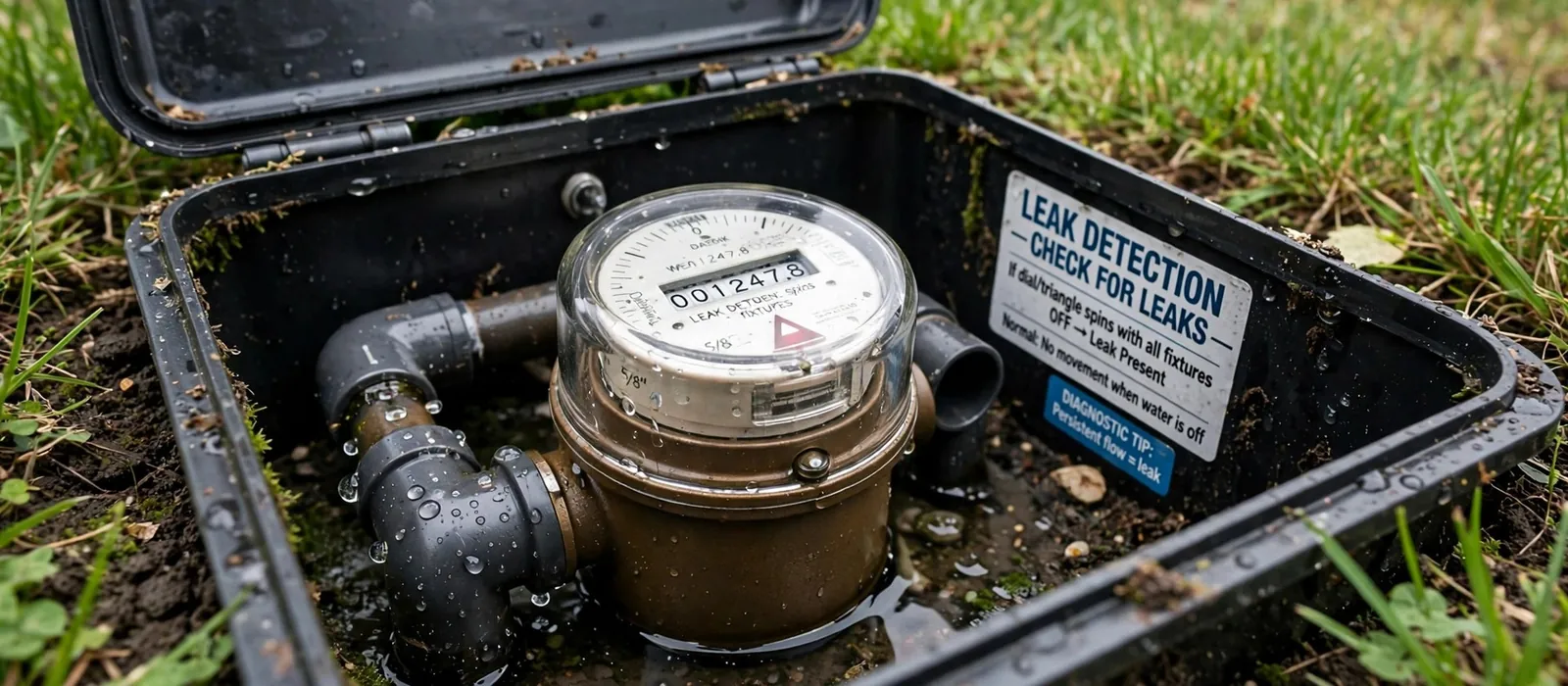
To detect a water leak at home in Independence, KY, start with the water meter. Turn off every tap and appliance, then watch the small dial or triangle on the meter for two to five minutes. If it keeps moving, water is escaping somewhere in the pipes.
The meter test is the fastest first step, but it only answers yes or no. Three more checks narrow down the location: a dye test for the toilets, listening along the pipes, and a slow walk to look for wet spots. This guide covers each one, what the results mean, and when to stop and bring in a licensed plumber.
Early signs that water is going somewhere it should not
Most leaks announce themselves quietly before they cause real damage. Look for these clues around the house.
A bill that creeps up
If usage climbs and nobody changed habits, a slow leak may be running day and night.
A meter that moves at rest
A dial that spins when every fixture is off is the clearest sign of a leak.
Musty smell in a closed room
Damp drywall, carpet pad or framing gives off a stale odor long before a stain appears.
Stains, bubbles or peeling paint
Brown rings on a ceiling or paint that bubbles on a wall often trace back to a supply line or drain.
Soft or warped flooring
Laminate that cups at the seams and vinyl that lifts near a wall can mean moisture underneath.
A wet patch in the yard
Grass that stays green and soggy in dry weather, or a soft spot between the street and the house, may point to a buried line.
Run the meter test properly
Stop all water use
Close every faucet, make sure the dishwasher and washing machine are idle, and pause the ice maker if you can. Check that nobody flushes during the test.
Find and open the meter box
The meter usually sits in a ground-level box near the street, with a lid you can lift using a screwdriver. Watch for spiders and wear gloves.
Read the leak indicator
Most meters have a small triangle or star that spins when any water flows. Even a slow turn means flow. Note the number on the register too.
Wait and compare
Write down the reading, wait 30 minutes without using water, and read it again. A changed number confirms a leak even if the indicator looked still.
Split the system
Close the main shutoff valve at the house and look at the meter again. If it stops, the leak is inside the house. If it keeps moving, the leak is on the buried line between the meter and the house.
The dye test for a toilet that runs silently
Toilets are the most common hidden leak. A worn flapper lets water seep from the tank into the bowl, and you may never hear it. The fix is cheap, but you have to know it is happening first.
Remove the tank lid and drop in 8 to 10 drops of food coloring or a dye tablet. Do not flush. Wait 15 minutes, then look in the bowl. Any color showing up means the flapper or flush valve seat is not sealing, and water is draining through all day.
Run the test on each toilet in the house, including the one nobody uses. A guest bathroom toilet can leak for months without anyone noticing. If the flapper looks warped, cracked or slimy, replacing it is a ten-minute job for most homeowners.
Meter still moving?
Close the main valve and call our 24/7 line if you cannot find the source.
Listen, touch and look for wet spots
Once the meter confirms a leak, walk the house with the TV off and the HVAC fan paused. Quiet makes small sounds easier to catch.
- Press a screwdriver handle to your ear and the tip to a pipe to hear hissing or trickling in the wall.
- Listen at the water heater, since a dripping relief valve or fitting can hiss softly.
- Check under every sink for damp cabinet floors, rusty trap nuts and drips on supply lines.
- Feel the drywall below tubs and showers for cool, soft or swollen areas.
- Look at the ceiling below upstairs bathrooms for rings, sagging or fresh paint cracks.
- Check the washing machine hoses for bulges and the shutoff valves for crusty mineral deposits.
- Walk the yard after a dry spell and note any area that stays muddy or greener than the rest.
- Look inside the crawl space or basement for wet insulation, dripping joints and damp soil.
What each clue usually points to
Use this as a rough decision guide. It does not replace a real inspection, but it helps you pick the next move.
| What you notice | Likely source | Your next step |
|---|---|---|
| Meter moves, house valve closed | Buried line past the meter | Mark the spot and call a plumber |
| Meter stops when house valve closes | A leak inside the house | Do the dye and listening checks |
| Dye shows in the toilet bowl | Worn flapper or flush valve | Replace the flapper and retest |
| Hissing inside a wall | Pressurized supply pipe | Shut off the main and call a plumber |
| Stain below a bathroom | Drain, supply or shower pan | Open the area and trace the water |
| Soggy yard, no rain | Service line or irrigation line | Close the main and arrange a repair |
If more than one row fits, trust the meter result first. It is the one test that cannot be fooled by a stain that traveled along a joist.
Who owns which pipe in Independence
Northern Kentucky Water District (NKWD) owns the water line from its main to your meter. The property owner owns everything from the meter to the house. That split decides who pays when a leak turns up, so the meter test matters beyond finding the leak.
If the dial moves with your house valve closed, the leak is on your side of the meter, and the repair is your responsibility. If water is bubbling up at or before the meter box, call NKWD customer service. NKWD also asks customers to report their service line material, so while the box is open, note whether the pipe entering your home looks like copper, plastic or gray metal and use the district's service line contact to report it.
Source: Northern Kentucky Water District (utility service line ownership and customer reporting guidance)
Why a slow leak costs more than it looks
A drip of one drop per second wastes roughly 3,000 gallons over a year, and a toilet flapper that leaks silently can pass far more. Water can also run along a joist for several feet before it shows as a stain. The wet spot is often not above the leak, so a plumber starts at the meter and works backward.
When to stop and call a plumber
Do the meter, dye and listening checks yourself. Stop there if the leak is behind a finished wall, under a slab, or on the buried line. Cutting into drywall without knowing where the pipe runs often turns one problem into two. Our leak detection service uses sensitive listening gear to pinpoint the break so the opening stays small.
If the meter runs hard and you cannot find the source, close the main valve and call our 24/7 line. A burst section needs fast action.
Our burst pipe repair crews handle those jobs across Independence and Taylor Mill. For a buried line leak, the work is covered under water line repair and replacement. Homes closer to Elsmere get the same service.
Never ignore a leak near the electrical panel or an outlet. Keep everyone away and shut off power at the panel only if you can reach it dry.
Frequently asked questions
Two to five minutes is enough to see the leak indicator spin. For a slow leak, take a written reading, wait 30 minutes without using water, and read it again. A changed number means water is leaving the system.
Yes. Silent toilet flappers, a failing water heater valve and a buried service line can all lose water for weeks with no stain. A usage jump with no change in habits is a reason to run the meter test.
NKWD owns the line from its main to the meter, and the property owner owns the pipe from the meter to the house. If the meter test shows the leak is past the meter, repair falls to you. If water surfaces before the meter, call NKWD first. NKWD also asks customers to report service line material, which you can do through its service line contact.
Yes. A few drops of food coloring or a dye tablet are harmless to the tank, flapper and septic or sewer systems. Rinse the tank by flushing once the test is done so the color does not linger.
Hissing means water is under pressure and escaping, often inside a wall or under a floor. Close the main shutoff, note where the sound is loudest, and call a plumber to confirm before opening anything.
Sources and official contacts
Local details in this guide come from the sources below. They are the right offices for questions about the water and sewer systems or plumbing rules.
- Northern Kentucky Water District, customer service
Owns the service line from the main to the meter and publishes an annual water quality report.(859) 578-9898 - Kentucky Division of Plumbing
Oversees plumbing in the state, including the State Plumbing Code that sets the standards for our work. Verify a plumber's license or ask about permits here.(502) 573-0397