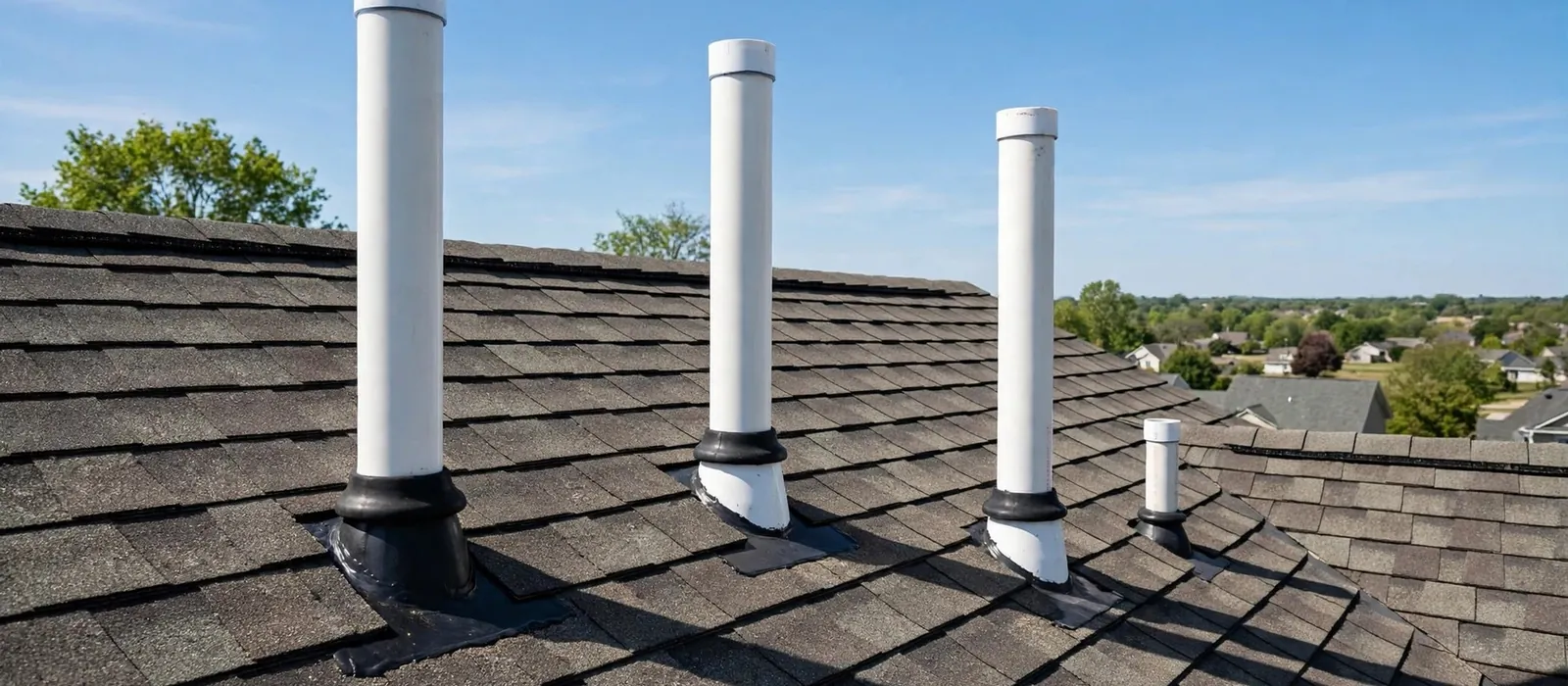
A vent pipe is the open pipe that runs from your drain system up through the roof. It lets air into the drains so water can flow, and it lets sewer gas escape outside instead of into the house. If you have a gurgling drain in Independence, KY, a blocked or missing vent is one of the first things a plumber checks.
Below you will find how vents work, the signs of a failing one, a way to sort the causes, and the point where guessing stops paying off. Homes of different ages vent in different ways, so we also explain why a quick look inside the attic or on the roof is rarely enough.
What a vent pipe does
Every drain needs air behind the water. Without it, water leaving a sink pulls a vacuum, and the vacuum drags water out of the trap, the bent pipe under the fixture that holds a seal against sewer gas. A vent gives that air a path, so water drops quietly and the trap keeps its seal.
Vent pipes are usually 1.5 to 3 inches wide and are made of PVC, ABS, or older cast iron or galvanized steel. They connect to each drain branch, join into a larger stack, and exit through the roof. A fixture may have its own vent or share one with a nearby fixture.
Signs your vent is not working
A vent problem rarely shows up as a single clear symptom. Look for a pattern across the fixtures in one part of the house.
Gurgling sounds
Air is being pulled through the trap because the vent cannot supply it. You may hear it from a sink when the washer drains.
Slow drains in several fixtures
A blocked vent slows the flow like a bottle with a plugged top, even when the drain itself is clear.
Sewer smell
A siphoned trap loses its water seal, and gas can enter the room.
Toilet bubbles or flushes weakly
Air moving the wrong way through the bowl water suggests the vent is not equalizing pressure.
Water level that rises and falls
A bowl or tub that drops after another fixture runs shows the trap is being drawn down.
Clean drain, same trouble
If a cable passes through the drain without helping, a vent is the next suspect.
Drain trouble or vent trouble?
Use this to decide where to look first. It cannot replace a test, but it narrows the search.
| What you notice | Points to a drain clog | Points to a vent problem |
|---|---|---|
| One fixture slow | Yes | Rarely |
| Several fixtures slow at once | Main line clog is possible | Common |
| Gurgle when another fixture drains | Sometimes | Yes |
| Slow even after cabling | No | Yes |
| Sewer smell near a dry trap | No | Yes, a siphoned trap |
| Water backs up from lowest drain | Yes | No |
If the lowest drain in the house is backing up, treat it as a sewer line problem first.
Smell sewer gas?
Open windows and call our 24/7 line.
How a clogged vent actually blocks flow
A vent can fill with leaves, a bird nest, snow, ice, or the rust flakes of an old galvanized pipe. The top of a 1.5 inch vent can close up with frost on a cold night. Air cannot enter, so each flush pulls on the water in nearby traps.
The effect is a siphon. Water in a trap that should hold about two inches of seal gets pulled down the drain, and the dry trap lets sewer gas up. The gas is not just unpleasant, because it can carry hydrogen sulfide, which smells like rotten eggs. If the smell is strong, open windows and call a plumber.
Why Independence homes vent differently
Independence grew by annexation in the 1960s, 1970s and 1981, so homes here span several building eras. Houses from different decades may have different vent layouts, with older ones using shared or cast iron vents and newer ones using PVC and air admittance valves.
That variety is why guessing fails. A vent that looks right from the roof may be cracked inside a wall or tied in from a remodel in a way that was never meant to work. A camera inspection or smoke test shows exactly what is connected, so you fix the real problem instead of the likely one.
Source: City of Independence history page (municipal)
Common vent layouts you may find
A stack vent is the main pipe that rises from the lowest drain and exits the roof. A branch vent ties a group of fixtures into that stack. A wet vent is a drain pipe that also carries air for a nearby fixture. Each design is common in homes.
An air admittance valve is a spring-loaded device that opens to let air in and shuts to keep gas out. It is often used under a sink or in an island layout where a roof vent is hard to run. It still needs a plumber to place it correctly, since it cannot replace the main stack vent.
How a plumber finds a vent fault
Interview and listen
The plumber asks which fixtures gurgle and when. Timing often points to a single branch.
Run water at test points
Fixtures are run one at a time and in pairs while the plumber watches traps and listens at the stack.
Check the roof termination
The vent opening is looked at for debris, ice or a bent cap, and a hose or cable may be run down.
Camera or smoke test
A camera shows the inside of accessible pipe. A smoke test pushes harmless smoke into the system and shows leaks and blocked paths.
Choose the repair
Options range from clearing a stack to adding a new vent line or an air admittance valve where local rules allow.
Safe checks you can do yourself
You can learn a lot without climbing on a roof. Keep both feet on the ground unless you have the right equipment and experience.
- Run the water at each fixture and note which ones gurgle.
- Pour a gallon of water into a rarely used drain to refill a dry trap.
- Look for a vent cap on the roof from a safe spot on the ground.
- Check the attic for water stains around any pipe that goes through the roof.
- Do not climb onto a wet, icy or steep roof for this.
- Never run a cable down a vent without knowing what is below it.
When to call a plumber
Call a plumber when gurgling lasts more than a day, more than one fixture is slow, or you smell sewer gas. A repair that needs roof work, opening walls, or cutting into a stack should not be a weekend project, because a mistake can leave the system worse than before. Our licensed and insured plumbers give a clear price before work starts, and our 24/7 emergency line is there when sewage backs up.
Start with a drain cleaning visit if one line is slow, or a sewer inspection if you want a camera look. We also serve Elsmere and Edgewood.
Frequently asked questions
Every fixture needs a path for air. That may be its own vent, a shared vent, or an air admittance valve in some layouts. Rules for each case differ, so ask a licensed plumber.
Yes. A blocked vent lets drain flow pull water out of traps, and a dry trap lets gas rise into the room. Pouring water into the drain refills the seal until the vent is fixed.
Independence grew by annexation in the 1960s, 1970s and 1981, so homes span several building eras. Vent layouts differ across them and remodels add more variation. A camera or smoke test beats guessing.
No. A partial clog in the drain can also make a gurgle. If a cable clears the drain and the sound stays, the vent is likely the cause.
No. A capped vent can slow drains and let gas build. Ask a licensed plumber before changing any vent.
Sources and official contacts
Local details in this guide come from the sources below. They are the right offices for questions about the water and sewer systems or plumbing rules.
- Sanitation District No. 1
Handles sewer and stormwater, and takes sewer emergency reports.(859) 578-7450 - Kentucky Division of Plumbing
Oversees plumbing in the state, including the State Plumbing Code that sets the standards for our work. Verify a plumber's license or ask about permits here.(502) 573-0397